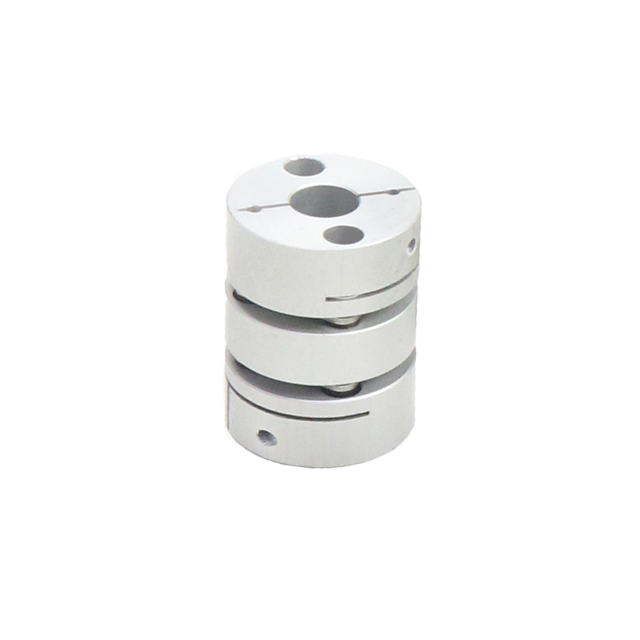
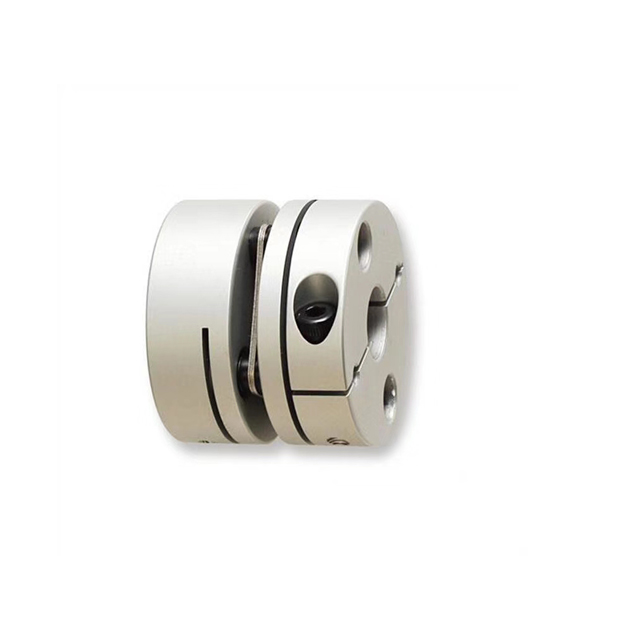
Couplings are common components in mechanical transmission, used to connect two shafts and transmit motion and torque between them. Sometimes, they are also used to prevent the connected parts from withstanding excessive loads, thus playing a role in overload protection. The following is an introduction to the classification and functions of couplings:
Rigid Couplings
Flange Couplings: This is the most widely used type of rigid coupling. It consists of two half-couplings with flanges, which are connected to the two shafts respectively by keys, and then the two half-couplings are connected into one body with bolts to transmit motion and torque. It has a simple structure and can transmit large torque, but requires strict alignment of the two shafts. It is commonly used in shafting transmission with stable load, high speed or high transmission precision requirements, such as in the spindle transmission system of machine tools.
Sleeve Couplings: They consist of a sleeve connecting the shaft ends of the two shafts and keys or pins connecting the sleeve and the shaft. Its structure is simple and the radial size is small, but it has high requirements for the alignment of the two shafts, and cannot buffer and absorb vibration. It is commonly used in some low-speed, light-load and well-aligned occasions such as the feed system of machine tools.
Flexible Couplings without Elastic Elements
Sliding Block Couplings: They consist of two half-couplings with radial grooves on the end faces and an intermediate sliding block with convex teeth on both sides. The convex teeth of the intermediate sliding block can slide in the grooves of the half-couplings to compensate for the relative displacement of the two shafts. They are suitable for occasions with low speed, no impact and large relative displacement of the two shafts, such as shaft connections in some textile machinery and agricultural machinery.
Gear Couplings: They consist of two half-couplings with external teeth and two shells with internal teeth, and transmit torque through the mutual meshing of internal and external teeth. They can compensate for the comprehensive displacement of the two shafts, have large bearing capacity and reliable operation, but have complex structure and high cost. They are commonly used in high-speed and heavy-load shafting transmission, such as in the propulsion system of ships.
Universal Couplings: The common cross-shaft universal coupling consists of two fork-shaped parts and a cross-shaped part. It can reliably transmit torque when the angle between the two shafts is large (up to 35° - 45°) and can adapt to the angle change between the two shafts. It is commonly used in the transmission system of automobiles, such as the connection between the drive shaft and the drive axle.
Flexible Couplings with Elastic Elements
Elastic Sleeve Pin Couplings: Their structure is similar to that of flange couplings, except that pins with elastic sleeves are used instead of connecting bolts. The elastic sleeves are generally made of rubber, and the elasticity of rubber is used to compensate for the relative displacement of the two shafts and buffer and absorb vibration. They are suitable for medium and small power transmission with stable load, requiring forward and reverse rotation or frequent starting, such as the connection between water pumps, fans and motors.
Elastic Pin Couplings: Pins made of nylon or other elastic materials are used to replace the elastic sleeve pins in elastic sleeve pin couplings. It has a simpler structure, is convenient to manufacture, install and maintain, and has a longer service life. It can allow large axial displacement and is suitable for occasions with large axial ,frequent forward and reverse changes and frequent starting, and is widely used in mining machinery and other equipment.
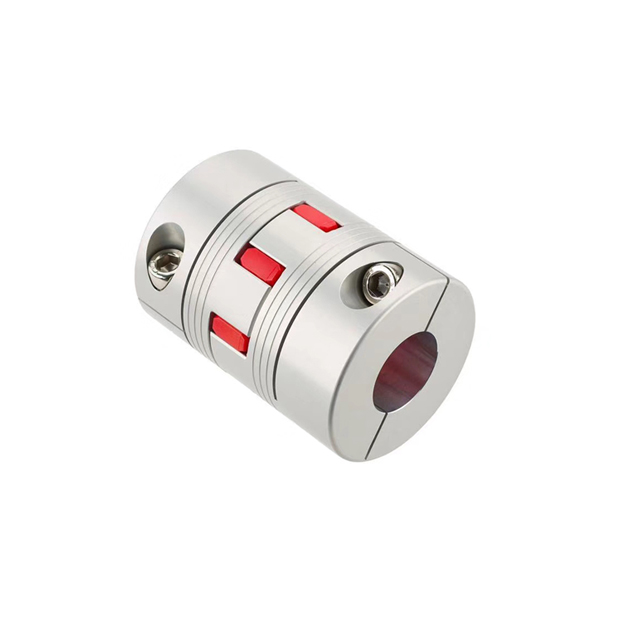
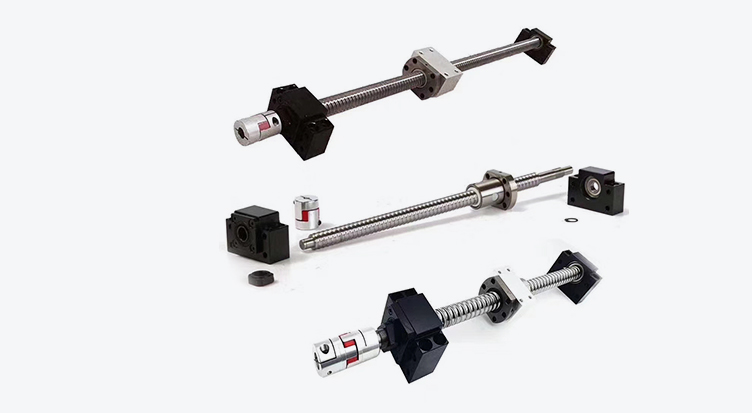
Plum Blossom Elastic Couplings: They consist of two half-couplings and plum blossom elastic elements. The elastic elements are usually made of polyurethane and other materials. It has a compact structure, large bearing capacity, good buffering and vibration reduction performance, and can compensate for large axial, radial and angular displacements. It is widely used in shafting transmission in metallurgy, chemical industry, machinery and other industries.
Connect Two Shafts and Transmit Torque: This is the most basic function of couplings. They can firmly connect the driving shaft and the driven shaft together, so that power can be smoothly transmitted from the driving shaft to the driven shaft to realize the operation of mechanical equipment. For example, in a fan driven by a motor, the coupling connects the motor shaft and the fan shaft, so that the power of the motor is transmitted to the fan, making the fan impeller rotate to generate wind force.
Compensate for Relative Displacement of Two Shafts: In actual work, due to manufacturing and installation errors, deformation of parts after loading, thermal expansion and contraction caused by temperature changes, foundation settlement and other reasons, the two connected shafts often produce axial, radial, angular or comprehensive displacement. Flexible couplings can compensate for these displacements within a certain range, avoid additional stress and deformation between shafts, bearings, couplings and other parts, and ensure the normal operation of equipment.
Buffer and Absorb Vibration: Flexible couplings with elastic elements, such as elastic sleeve pin couplings and plum blossom elastic couplings, the elastic elements in them can absorb and buffer energy when the equipment is started, braked or subjected to impact loads during operation, reduce the impact of vibration and impact on the system, protect the parts of the equipment and prolong the service life of the equipment. For example, when a car encounters a bumpy road during driving, the coupling between the engine and the transmission can buffer the vibration caused by road impact.
Overload Protection: Some couplings have overload protection function. Like shear pin couplings, when the transmitted torque exceeds a certain value, the shear pin will be sheared, thus cutting off the power transmission between the two shafts and preventing other important parts from being damaged due to overload, thus playing a role in protecting mechanical equipment.